When we pick a food container, the material comes first
Two clear containers look the same and aren't. They're equally see-through, but heat resistance, oil resistance and how easily they pick up smells all come down to the material. That's where we start.
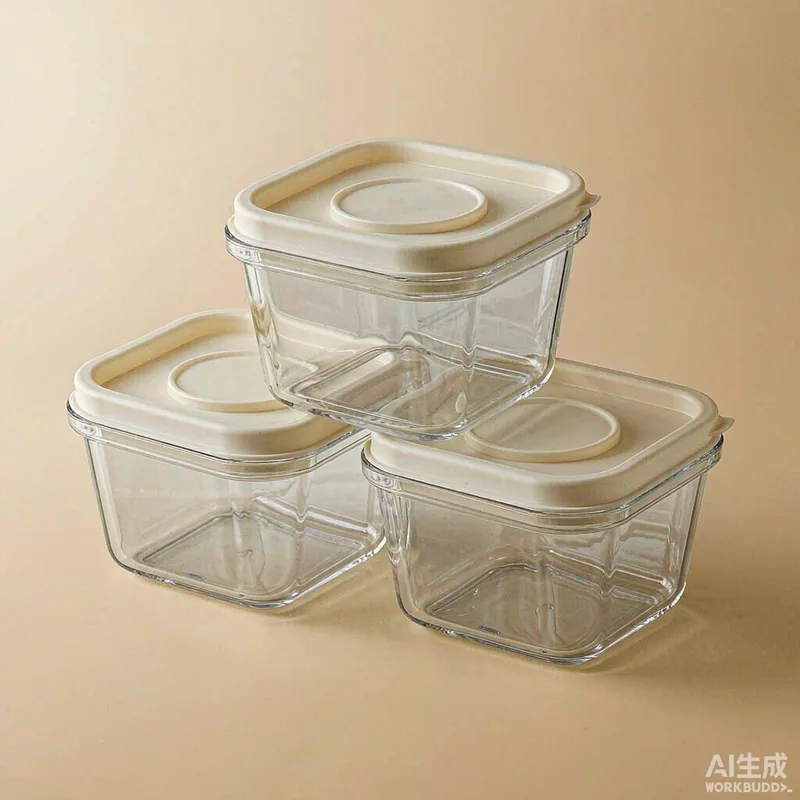
The easiest one to work with is PP. It takes around 100 to 120 degrees, so it can go in the microwave, body only. Plenty of PP containers are dishwasher-safe too, and it's a common food-contact material under the Food Sanitation Act. Our Airtight Container S/M/L is a PP body with a silicone gasket.
AS is clearer and harder, so it resists scratching, but it only handles about 70 to 80 degrees. Not the thing for hot soup or oil straight from the pan. If you want the glass-like look, AS. If you want the microwave and the dishwasher, PP.
What actually seals a container is the gasket, not the body. Silicone holds its shape from frozen up to near boiling. Once it hardens, or food collects in the groove, it starts to leak. Pull it out and wash it once a month, and replace it when it stiffens.
Keep capacities consistent, 300 ml, 700 ml and 1300 ml, and the stacks stay put. Same footprint also means the fridge shelves stop shifting and stock is easier to count. For business orders we issue lot inspection reports in Japanese.